The impacts of vaping on the body and mind
Vaping isn’t safe, far from it. For smokers it’s believed to be less harmful than cigarettes, but for smokers and non-smokers alike it’s still incredibly harmful.

As with cigarettes there is no high obtained from vaping – just the unpleasant physical feeling of your body taking in poison.
The damage to physical and mental health is significant.
A recent study by the CDC, or Centers for Disease Control and Prevention, (national public health institute in the United States) reveals that in the USA approximately 47% of children who have tried e-cigarettes have become addicted.
How long does it take for the vape to work?
Vaping doesn’t work and that is important.
Nicotine has an effect within a few minutes but remember, it’s not safe or cool, and the health effects do not end when you breathe it out – vaping can have serious long-term health consequences, so it’s best to steer clear.

Vaping doesn’t work and that is important.
Nicotine has an effect within a few minutes but remember, it’s not safe or cool, and the health effects do not end when you breathe it out – vaping can have serious long-term health consequences, so it’s best to steer clear.
What’s holding you back?
Not sure if you really want to quit vaping?
Want to stop, but concerned that you’ll find it tough?
Worried that you’ll be deprived for the rest of your life without vapes?
We know that taking the first step can be difficult, but we’re here to answer your questions in complete confidence – with no pressure and no judgement.
Start the free quizHow long do the effects of vape last?

The effects of vaping can vary depending on factors like the type of device, strength of nicotine in the juice, how much you’re vaping, and your own body.
However, you need to understand that there are no benefits to vaping and the health effects do not end when you breathe it out – vaping can have serious long-term health consequences. But generally, here’s how it works:
-
Immediate reaction
When you vape nicotine will enter the blood stream within a few minutes.
-
Short-term effects
Some short-term effects, like feeling lightheaded or dizzy, can kick in right after vaping and might last for a little while, maybe 10-15 minutes but remember that nicotine is highly addictive (more addictive than cocaine) and vaping can have long-term health consequences.
-
Longer-term effects
The longer-term effects can stick around longer, especially if you’re vaping regularly.
Things like coughing, trouble breathing, and changes in your taste or smell might hang around for days or even longer if you keep vaping.
-
Health risks
Plus, there are bigger health risks to think about. Vaping is addictive and can mess with your lungs, heart, and brain, and it might even up your chances of getting sick.
Those effects can stick with you for a long time, maybe even for life.
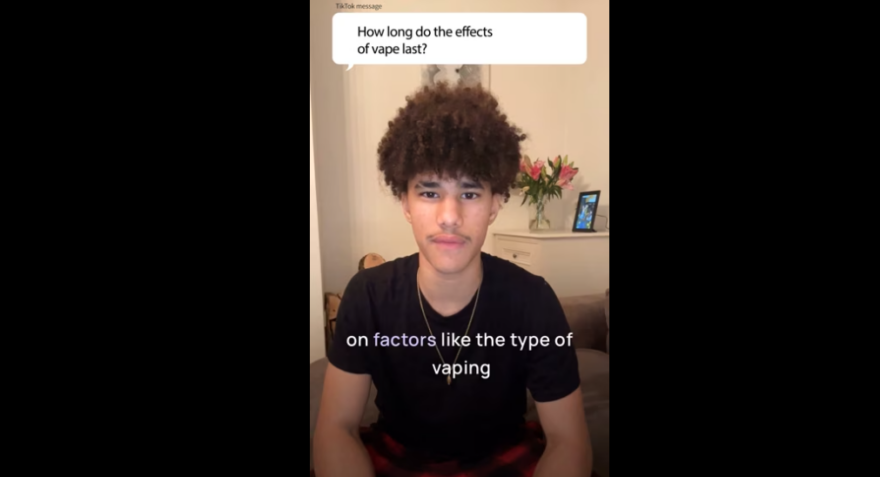
The effects of vaping can vary depending on factors like the type of device, strength of nicotine in the juice, how much you’re vaping, and your own body.
However, you need to understand that there are no benefits to vaping and the health effects do not end when you breathe it out – vaping can have serious long-term health consequences. But generally, here’s how it works:
When you vape nicotine will enter the blood stream within a few minutes.
Some short-term effects, like feeling lightheaded or dizzy, can kick in right after vaping.
They might last for a little while, maybe 10-15 minutes but remember that nicotine is highly addictive (more addictive than cocaine) and vaping can have long-term health consequences.
The longer-term effects can stick around longer, especially if you’re vaping regularly.
Things like coughing, trouble breathing, and changes in your taste or smell might hang around for days or even longer if you keep vaping.
Plus, there are bigger health risks to think about. Vaping is addictive and can mess with your lungs, heart, and brain, and it might even up your chances of getting sick.
Those effects can stick with you for a long time, maybe even for life.
How long do the effects of vape last?
The effects of vaping can vary depending on factors like the type of device, strength of nicotine in the juice, how much you’re vaping, and your own body.
However, you need to understand that there are no benefits to vaping and the health effects do not end when you breathe it out – vaping can have serious long-term health consequences. But generally, here’s how it works:
-
Immediate reaction
When you vape nicotine will enter the blood stream within a few minutes.
-
Short-term effects
Some short-term effects, like feeling lightheaded or dizzy, can kick in right after vaping and might last for a little while, maybe 10-15 minutes but remember that nicotine is highly addictive (more addictive than cocaine) and vaping can have long-term health consequences.
-
Longer-term effects
The longer-term effects can stick around longer, especially if you’re vaping regularly.
Things like coughing, trouble breathing, and changes in your taste or smell might hang around for days or even longer if you keep vaping.
-
Health risks
Plus, there are bigger health risks to think about. Vaping is addictive and can mess with your lungs, heart, and brain, and it might even up your chances of getting sick.
Those effects can stick with you for a long time, maybe even for life.
What are the side effects of vaping for teens?
Short-term side effects
-
Cotton mouth and always feeling thirsty
Vaping can dehydrate you and leave your mouth feeling really dry. It’s because of an ingredient called propylene glycol in the vape juice.
Many teens use devices like a vape pen, which are popular due to their discreet size and ease of use.
-
Throat irritation and coughing fits
Inhaling hot vapour can tickle your throat making you cough like crazy and get short of breath. Not good.
-
Developing nicotine addiction
Nicotine is highly addictive. Even if you think you’re vaping “nicotine-free” juice, turns out it might still have nicotine in it. And that stuff’s super addictive, leading to major cravings and withdrawal when you do try to quit (unless you use the right method).
-
Increased heart rate and blood pressure
Nicotine in vapes can amp up your heart rate and blood pressure, especially risky if you’ve got heart issues.
Long-term side effects
The long-term effects of vaping are still being researched but emerging evidence suggests potential risks associated with prolonged use:
-
Messing up your lungs / Respiratory issues
Vaping isn’t just harmless water vapour.
The stuff in those clouds can mess with your lungs, causing issues like asthma, bronchitis, and even chronic obstructive pulmonary disease (COPD) down the line.
This is because once heated the vapour contains really small particles which can be inhaled into the lungs.
-
Screwed-up lung development
If you’re still young, vaping could stunt your lung growth, leaving you with damaged lung health for life.
-
Lung inflammation and damage
The American Lung Association has stated that the inhalation of harmful chemicals [from vaping] can cause irreversible lung damage and lung disease such as lipoid pneumonia and vaping-associated lung injury (EVALI).
Vaping has been linked to lung injuries, including serious cases like EVALI, which have resulted in hospitalisations and even deaths. Vitamin E acetate has been identified as a likely cause of some vaping-related lung injuries, especially in illicit or unregulated products. While some lung injuries may improve with treatment, not all lungs heal completely, and some damage can be permanent.
-
Heart problems on the horizon
Some studies say vaping could up your chances of having a stroke or heart attack.
-
Flavourings, Popcorn lung & lung damage
The flavours in vapes may seem harmless, but some can contain nasty chemicals that mess up your lungs, even causing a scary condition called “popcorn lung”.
The chemical that causes popcorn lung is banned in the UK, US & EU but is still used in illegal vapes and in flavours in the rest of the world.
-
Toxic metal and cancer causing chemicals
Vape juice is loaded with all sorts of chemicals (over 80 different ones), including cancer-causing ones and toxic metals like nickel and lead.
Definitely not stuff you want to be breathing in!
Defective vaping devices can also cause serious injuries, such as burns or explosions.
-
Ingredients not meant to be breathed into your lungs
Not one of the four main ingredients in vapes (propylene glycol, vegetable glycerin, nicotine and any number of different flavourings) are designed to be breathed into your lungs.
Vegetable glycerine is a key ingredient in vape juice, used to create the vapor you see when vaping.
-
Mental health effects
Vaping has been increasingly linked to adverse mental health among adolescents and young adults. Read more on the effects of vaping on mental health
So, bottom line: Vaping might seem like an innocent, fairly harmless thing to do, but it’s seriously not worth wrecking your health over. Stay smart and stay away from vapes.
Effects of vaping on mental health
Vaping, particularly involving nicotine and THC, has been increasingly linked to adverse mental health outcomes, especially among adolescents and young adults.
Research indicates that vaping can make worse the symptoms of anxiety and depression and is associated with higher risks of suicidality.
A significant proportion of young people have reported using vaping as a coping mechanism for existing mental health issues, not recognizing that it could potentially worsen their conditions.
Nicotine, which is in nearly all vape juices, is highly addictive and can impact brain regions associated with mood regulation.
This may lead to increased impulsivity, mood disorders, and an altered stress response, potentially heightening the users’ sensitivity to stress over time.
There’s also evidence suggesting depression and vaping are linked with vaping making depression worse.
Is vaping safer than smoking for teens?
So, for smokers it’s believed that vaping is less harmful than cigarettes, but for smokers and non-smokers alike vaping is still incredibly harmful and definitely something to be avoided at all costs.
Smoking cigarettes exposes users to more harmful chemicals than vaping, but both carry significant risks. Some teens use both vaping products and regular cigarettes, a behaviour known as dual use, which can increase health risks. Dual use of vaping and regular cigarettes can lead to greater exposure to toxins and may not reduce overall health risks.
It’s important to note that dual use of e-cigarettes and regular cigarettes can actually increase exposure to harmful chemicals and toxins, leading to worse respiratory outcomes and undermining efforts to quit smoking.

So, for smokers it‘s believed that vaping is less harmful than cigarettes, but for smokers and non-smokers alike vaping is still incredibly harmful and definitely something to be avoided at all costs.
Smoking cigarettes exposes users to more harmful chemicals than vaping, but both carry significant risks. Some teens use both vaping products and regular cigarettes, a behavior known as dual use, which can increase health risks. Dual use of vaping and regular cigarettes can lead to greater exposure to toxins and may not reduce overall health risks.
Some people say that for smokers vaping is kind of like falling from the 10th floor of a building instead of the 20th floor – you’re still in peril either way. While vaping is less harmful, it is still vaping harmful and not risk-free. Both smoking and vaping are linked to heart disease, but cigarette smoking is a leading cause.
Recent studies also strongly suggest that vaping is a gateway to smoking for young people.
Some people try vaping to quit smoking, but the evidence on its effectiveness is mixed.
Disposal and environmental impact of vaping
The environmental impact of vaping is a growing concern that often gets overlooked in discussions about health risks and nicotine addiction.
While many people focus on the effects of vaping on the body and mind, it’s important to recognise that vaping products like e-cigarettes, disposable vapes, and vape pens also pose serious threats to our environment.
Vaping products contain a mix of harmful chemicals, heavy metals, and other additives that can pollute the air, soil, and water. When e-cigarettes and disposable vapes are thrown away, they don’t just disappear.
The lithium-ion batteries inside these devices can leak toxic substances, cause fires, or even explode if not disposed of properly. E liquid and vape juice can seep into the ground, contaminating water supplies and harming wildlife.
The problem doesn’t stop there. The rise of disposable vapes and single-use e-cigarettes has created a mountain of electronic waste. These devices can take hundreds of years to break down, releasing potentially harmful chemicals and heavy metals into the environment as they decompose.
The mining of metals like lithium and cobalt for e-cigarette batteries also has a devastating impact on ecosystems and local communities, adding to the overall environmental cost of vaping.
Vaping advocates and public health organisations are starting to raise awareness about these potential harms. They encourage users to recycle vaping products and dispose of them responsibly, but the reality is that most e-cigarettes and disposable vapes end up in landfills or as litter. This not only damages the environment but also increases the risk of exposure to harmful chemicals for non-smokers and young people.
The environmental impact of vaping is closely linked to public health. Harmful chemicals from vaping products can contribute to air and water pollution, which in turn can increase the risk of lung disease, cardiovascular disease, and other health problems for everyone—not just those who vape.
Pregnant women, young adults, and children are especially vulnerable to these risks, as exposure to toxic substances can affect brain development, cause low birth weight, and lead to mood disorders or other long-term health effects.
To reduce the environmental and health risks associated with vaping, it’s essential to adopt sustainable practices. Proper recycling and disposal of vaping products, as well as supporting smoking cessation and quit vaping programs, can help protect both our health and the planet. Health and human services organisations play a crucial role in promoting these efforts and providing resources for those looking to stop smoking or quit vaping for good.
By working together to address the environmental impact of vaping, we can help create a cleaner, healthier future for everyone especially young people and non-smokers who deserve to live in a world free from the harmful effects of tobacco products and electronic nicotine delivery systems.
Why wait to quit vaping?
Our online video programme is tailored for teens, offering a powerful and supportive way to stop for good.
Buy now for just US$10